Tiny but Mighty Print Templates
A Design Asset That Packs a Punch
As a designer who’s worked on everything from brand identities to social media campaigns, I’ve seen my fair share of design assets. When I first opened Tiny but Mighty, I was immediately struck by its balance of simplicity and impact. It’s the kind of template that feels both modern and versatile—perfect for a wide range of projects without overwhelming the viewer.
The visual mood created by Tiny but Mighty is clean, fresh, and approachable. The style leans toward minimalism with subtle textures and elegant line work. It doesn’t shout, but it definitely speaks. This makes it ideal for small businesses or handmade brands that want to convey a sense of quality and authenticity without overcomplicating their visuals.
Fitting Into Real-World Design Scenarios
Tiny but Mighty isn’t just another generic print template—it’s a thoughtful asset that can support a variety of creative directions. Whether you’re working on a logo design, product labels, or social media graphics, this template has the potential to elevate your work.
In brand identity projects, Tiny but Mighty can serve as a great foundation for supporting elements like stickers, badges, or packaging details. Its subtle patterns and geometric shapes add character without distracting from the core brand message. For example, if I were designing a seasonal campaign for a boutique product line, these templates could be used to create eye-catching posters, flyers, and even printable wall art that aligns with the brand’s aesthetic.
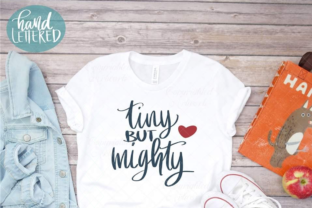
When it comes to product mockups, Tiny but Mighty shines. It works well as decorative accents on mugs, tote bags, and t-shirts. Imagine using it as a sticker design for a local event or a promotional item for an Etsy shop. The template’s versatility allows it to adapt to different formats, whether it’s a Canva template for digital use or a Cricut project for physical prints.
For marketing visuals, especially in editorial design or web design, Tiny but Mighty offers a nice contrast between bold text and delicate illustrations. It can be used as background elements, hero graphics, or even as part of a themed collection that ties together multiple campaign pieces. The key is to use it strategically so it enhances rather than competes with the main content.
Where Tiny but Mighty Excels
Tiny but Mighty performs best in areas where subtlety meets impact. Large layout areas, such as hero sections on a website or the front of a product box, are perfect for showcasing its design elements. It also works exceptionally well in product mockups, where its clean lines and soft textures add depth without overwhelming the viewer.
As a decorative accent, Tiny but Mighty can be used in packaging design or as part of a branded collection. It’s especially effective when paired with other design assets like SVG designs or PNG illustrations. For instance, using it as a background element in a Pinterest pin or Instagram post can help create a cohesive visual story that resonates with the target audience.
One of the most impressive aspects of Tiny but Mighty is how it adapts to different formats. Whether it’s a digital product, a printable design, or a commercial design asset, it maintains its integrity. This makes it a valuable addition to any design bundle or creative marketplace collection.
When to Use Tiny but Mighty with Caution
While Tiny but Mighty is incredibly versatile, there are situations where it might not be the best fit. In crowded layouts or complex backgrounds, the design elements can become lost or diluted. It’s important to test how it looks in different contexts before finalizing a design.
Additionally, when working on minimalist branding or professional corporate materials, the subtle textures and patterns in Tiny but Mighty might not align with the desired tone. These types of projects often require a more restrained approach, so it’s worth considering alternative design assets that offer greater simplicity.
Another consideration is readability. While Tiny but Mighty is visually appealing, it should never compromise the clarity of the main message. Always check contrast on both light and dark backgrounds, and ensure that it doesn’t interfere with the visual hierarchy of the design.
Practical Designer Notes
Before using Tiny but Mighty for a client project, there are a few things to keep in mind. First, test it in black and white to see how it holds up in different lighting conditions. Then, preview it at both small and large sizes to ensure it remains legible and impactful.
It’s also important to place it on real mockups to see how it interacts with other design elements. If you’re planning to print, always test print quality and inspect file formats, especially if PNG transparency is included. For vector-based projects, make sure SVG files are editable and compatible with your design software.
Finally, confirm that you have a commercial license before using Tiny but Mighty for a business project. This ensures that you’re using the asset legally and professionally, which is essential for maintaining trust with your clients and brand partners.
Conclusion
Tiny but Mighty is more than just a print template—it’s a versatile design asset that can enhance a wide range of creative projects. From brand identity to social media graphics, it offers a unique blend of elegance and functionality that’s hard to match. With the right approach, it can be a powerful tool for designers looking to create polished, professional results for their clients.